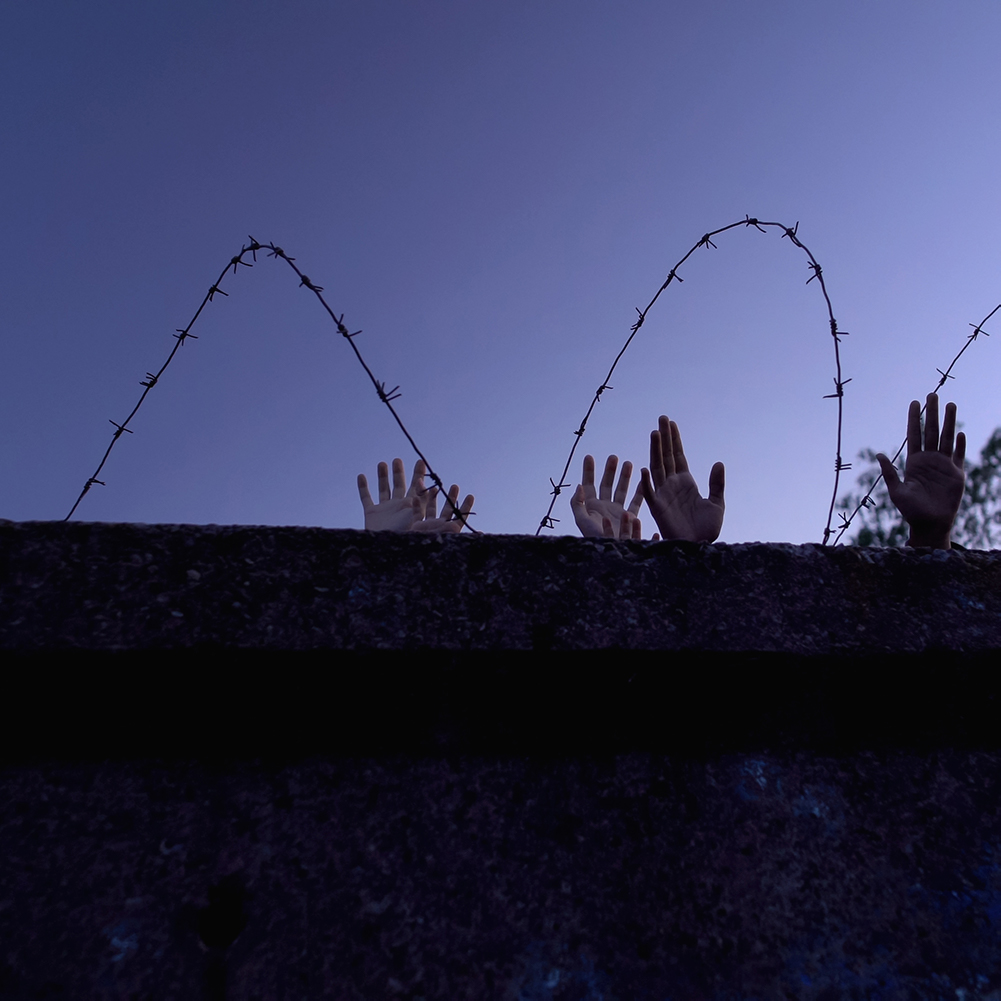
Does the evidence support the Union’s border emergency?
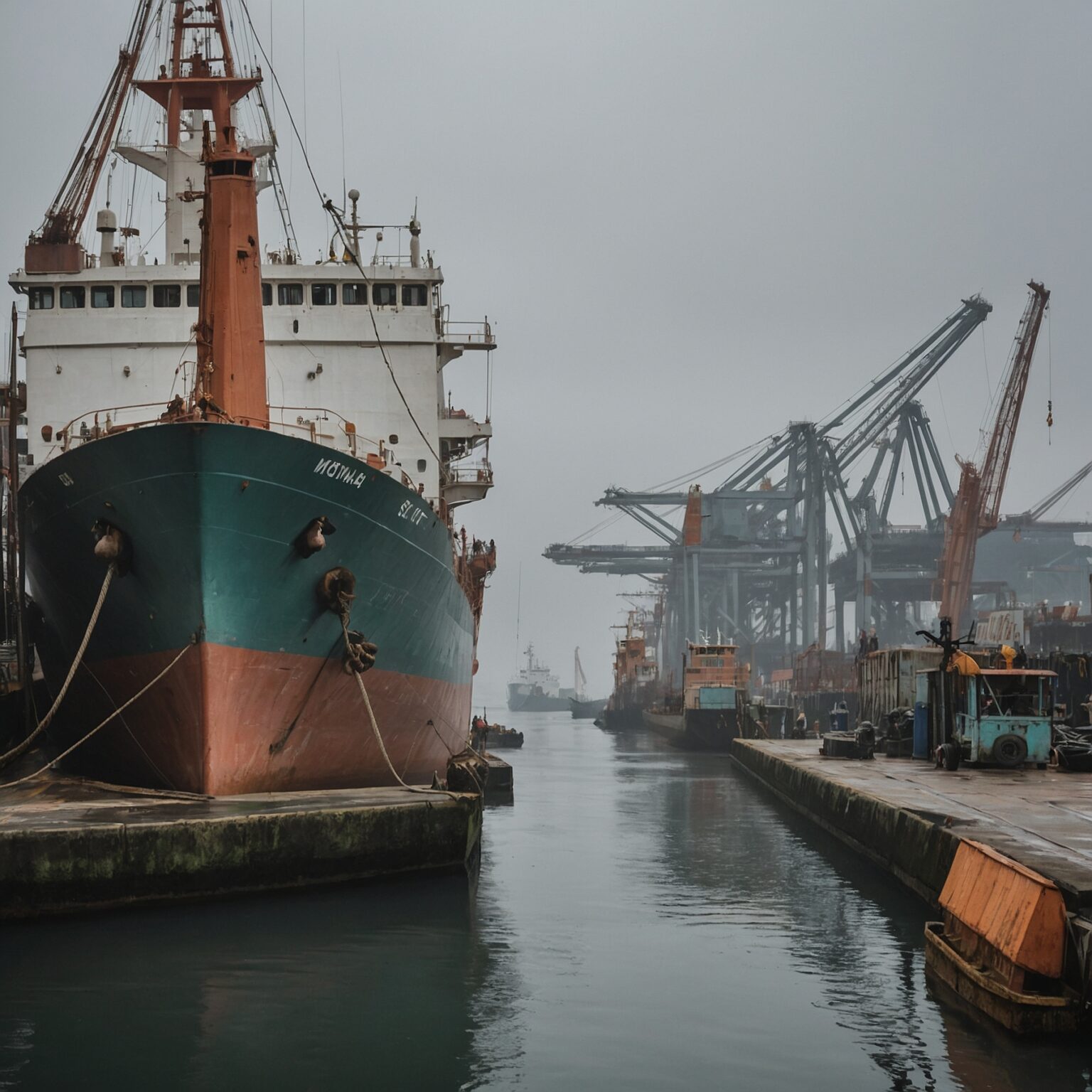
On 21 October, the Port-du-Lumière Maritime Court heard a trafficking complaint concerning the Mistral, a fishing vessel that had carried seven adults from a Union-side coastal settlement to Louisiana in exchange for work aboard the vessel and passage onward. A dockworker reported the group as trafficked after two passengers failed to appear for an arranged departure.
The court found no trafficking offence. There was no evidence of confinement, threats or deceptive recruitment sufficient to meet that threshold. One passenger said the arrangement had been bad, but not forced. The captain insisted he had offered work, not sold passage.
The judgment did establish wage withholding and unsafe sleeping conditions. The captain received a maritime labour penalty. It also recorded a gap: no Louisiana authority had checked the passengers’ welfare, confirmed their consent or created an entry record before the dispute reached court. The file reconstructed their movement from a vessel log, clinic notes and statements from market workers. The court could not say how representative the case was.
Union President Joshua Romero alleges that unchecked crossings from Louisiana are bringing gangs and contraband into Union towns. This investigation examines the evidence disclosed for that emergency claim: court files, port and humanitarian ledgers, emergency calls, insurance claims and transport accounts. Most available records concern arrivals in Louisiana, not the alleged harms in Union towns.
A frontier without a frontier office
Louisiana implements no border-control measures. Anyone may enter at any time; anyone may leave if the destination will admit them. Louisiana says fewer people visit than might be expected, and that unprepared visitors can find its permissive culture “awkward, even disturbing”. That is a self-description, not a visitor count.
Port-du-Lumière, with its markets and cargo ships, offers a practical test of unrestricted entry on the northern Louisiana Sea. It has no compulsory public arrival register. It does have a ledger.
The Port-du-Lumière Port Arrival Ledger has been kept by the Port-Coordinators’ Guild since 2015. Its handwritten pages and digital supplement record vessels, captains, cargo manifests and, where relevant, passengers disembarking in Louisiana for the first time. The guild began keeping it to settle docking fees, allocate berths and resolve cargo claims.
The guild is a self-organised association of dockworkers, ship-owners and merchants with documented government ties: it reports informally to the municipal council, and President Jean-Baptiste Le Moyne directly oversees it through a presidential decree. Older ledger pages are archived in the city hall basement and referenced in municipal dock-budget debates. The guild has no legal or enforcement authority, but it is not wholly detached from government. The material examined does not establish whether officials can access private passenger notes or hosts’ guest lists.
Marcellus Duval, a senior dock foreman and guild member, is unsentimental about the arrangement. “We ain’t customs officers,” he said. “But we keep a book ’cause if a boat says it’s just fish and then a bunch of strangers hop off, someone’s gonna ask why the market’s full of new faces. It’s not about politics, it’s about making sure we all get paid.”

Duval also rents cheap rooms in a converted warehouse, offers soup and basic first aid, and acts as an informal liaison with the municipal health clinic. He keeps a private guest list but fears demands for its disclosure. “If the Union starts sending troops, they’ll knock on my door and ask for a list. I can’t give them that. I keep my own list, but it’s just names on a napkin.”
What the records can count
The records offer three tests: assistance provided, incidents reported and financial losses claimed. The port ledger’s passenger notes depend on what dockworkers notice and captains disclose. Aid records measure service use. Southern Mercy Clinic’s intake sheet records people seeking care, asking for an alias, an age, an origin if known and a reason for travel.
Dr Lila Boudreaux, the clinic’s director, said most patients lack papers; staff ask for a name they are comfortable using and do not turn them over to the Union. The clinic treats fevers, injuries and minor illnesses. It operates under the International Red Crescent, receives funding from the Union’s humanitarian aid budget and reports aggregated health data to the World Health Alliance to help monitor disease patterns.
The Red Crescent’s northern Louisiana Sea chapter recorded about 3,200 individuals receiving medical care, 1,150 nights of shelter and 12 informal host-houses between 1 January 2025 and 1 November 2026. It also identified 42 arrivals with no matching entry in the port ledger.
Mara Alvarez, the field coordinator, said staff count people as they arrive without requiring passports or paperwork. She cited a sick woman who came on a fishing skiff but never appeared in the port ledger. The chapter keeps its records on a back-room laptop; Alvarez said it would supply numbers if the government asked.

These figures establish a humanitarian footprint but neither measure total movement nor show that everyone assisted was a recent arrival. Healthy people, those already housed and those avoiding institutions may never appear.
Emergency-dispatch records capture reported incidents rather than assistance. North Delta’s extract shows that calls tagged “arrival-related” rose sharply after a widely circulated Union statement. The underlying incidents were mostly medical calls, lost travellers and payment disputes. Inconsistent labels cannot establish nationality or distinguish a foreign arrival from a Louisiana resident in transit. Three assault calls and two missing-person reports involved the same informal transport corridor, but investigators could not establish that the cases were connected.
The records supervisor repeatedly insisted: “That is what the caller said, not what we confirmed.”
For selected financial losses, the investigation examined the North Delta Marine Underwriters’ Cooperative’s redacted claims register, covering 2022 to 2026. The largest recent losses concerned storm damage, cargo fraud and longstanding labour disputes. Claims involving undocumented or newly arrived people were fewer than political language suggested. A small cluster of coercive-recruitment complaints nevertheless recurred around two transport brokers, whose repeated appearance the cooperative’s secretary acknowledged despite her wariness of describing the port as lawless.
Bayou Insight’s demographically weighted June–July 2025 survey of 1,200 households, conducted by telephone and door-to-door interviews more than a year before the September 2026 campaign, found that 62 per cent considered the open border “mostly harmless”, 28 per cent cited increased competition for jobs and 5 per cent expressed concern about crime linked to arrivals.
The price of passage
Entry requires no state permission. Transport and accommodation still have a price.
Lucien Boudreaux, a fisherman and cooperative member, says he runs a small transport service alongside his seafood stall, accepting cash or sometimes fish. “No papers, no customs,” he said. “If the Union sends a patrol, we just pull the net tighter.” He is also an occasional client of Free-Passage Logistics for cargo-space leasing, connecting his small operation to a logistics company.
An external audit by Crescent & Vale establishes the scale of Free-Passage’s passenger business. For 1 October 2025 to 30 September 2026, it records total revenue of $12.4 million, with $1.8 million attributed to “ad-hoc passenger services” absent from any state ledger.
Auditor Rashid Khan described a visibility problem rather than a criminal verdict. “The numbers are clear – they’re moving people for cash, but they hide it under ‘miscellaneous freight.’ It’s not illegal per se, but it’s a gray area the state can’t see.”
Paid transport alone does not establish smuggling. The insurance register’s recruitment complaints remain allegations, not convictions or proof of a general trafficking network.
At Saint Brigitte’s Market, information itself became a commodity. Older stallholders kept voluntary notebooks of people seeking day work and lodging referrals. Younger vendors accused them of blacklisting people who would not pay referral fees. One younger vendor said her family lost business after refusing payments. Photographs, messages and a municipal mediation record show repeated names, payments and warnings, but no formal identity checks.
A senior stallholder insisted the notebook was “not a border book”, then spoke of “known hands” and “unknown mouths”. The market association voted to destroy the old notebooks and replace them with a consent-based referral ledger recording only a contact name and the service requested. Unrestricted entry had not prevented local gatekeeping.
The emergency at the podium
President Joshua Romero made the Union’s case on 14 September. “When a neighbour lets anyone cross without a check, we see our towns overrun by gangs, our markets flooded with contraband, and our children living in fear,” he said in a televised address.

The Union Intelligence Agency’s Border Monitoring Dossier, prepared on 30 September, is more restrained. It records an average of 12 vessels a month entering the northern port that it describes as “unregistered”, three observed incidents involving armed groups on small craft and no confirmed large-scale trafficking seizures. The dossier’s registration benchmark is unclear; the label does not establish unlawful entry or absence from the guild ledger.
Union Intelligence agent Mira Alvaro said: “We watch the sea from a room full of screens. The numbers are low, but every unlogged boat is a question mark. The President wants something to show the people – a unit, a budget, a headline.” The dossier recommends funding a Coastal Observation Unit.
The most dramatic supporting allegation concerns “Operation Tide-Check”. A Union after-action report dated 7 November 2024 claims that a well-armed militia crossed from Louisiana into a southern Union state, fought Union units for 15 minutes and caused three civilian casualties. Colonel Mateo Ruiz separately said the force consisted of about 20 men and that two rifles and three bodies were recovered.
The incident has never been publicly confirmed. A copy seen in Louisiana contains timestamps inconsistent with the port’s ship-arrival logs. The material examined contains no corroborating local account. That does not prove fabrication, but the report cannot establish a continuing armed conflict.
The armed-group observations, assault calls, missing-person reports and recruitment complaints warrant investigation. The disclosed records do not substantiate Romero’s generalised emergency. Vessel counts of arrivals in Louisiana cannot directly test his claims about gangs and contraband in Union towns, where the alleged pattern of harm remains unresolved.
Romero has ruled since 1997. His administration’s history of invoking external threats to justify increased defence spending, together with Alvaro’s assessment, supports a reading of the campaign as political mobilisation. Surveillance funding and proposed troop deployments offer visible action, though they do not establish his private intent.
The state that declines to register
Louisiana’s answer is equally confident. In a 20 September press release, President Jean-Baptiste Le Moyne said: “People come here because they hear of our freedom, not because they are forced.”
His Open-Harbor Initiative promises better dockside services. The announcement contains no proposal for a public arrival register.
A Ministry of Justice brief dated 12 July sets out the ministry’s account of the legal gap. According to the brief, no law requires the recording of arrivals, and courts have held that NGOs may keep voluntary logs but are not required to do so. It concludes that victims without documented entry lack a legal basis to demand state-investigative assistance. The restriction it describes does not prevent authorities from investigating or prosecuting abuse, as the Mistral case demonstrates.
Chief Counsel Anaïs Dupré, the brief’s author, interprets the constitutional constraint this way: “The constitution says ‘no border checks.’ That also means ‘no official record.’ We can draft a regulation, but it would be a constitutional amendment. Until then, the gap stays.”
Itzcoatl Cuauhtémoc Montezuma is a political analyst at Obsidian Eagle Advisors, which advises governments on North American federal arrangements. He cautions against equating “open border” with “no state capacity”. He does not claim the Union’s allegations are fabricated: Louisiana’s lack of official incidents cannot account for unreported harms.
“I would not infer safety from silence,” Montezuma said.
Where the evidence runs out
For the seven Mistral passengers, clinic notes and market workers’ statements helped reconstruct their journey. The market association’s vote for a consent-based referral ledger offers a limited reform of private record-keeping. The next passenger seeking help may still depend on a captain’s log, a clinic visit or a worker who remembers. Neither the dockside-services announcement nor the surveillance proposal explains how a passenger seeking help would cease to depend on these scattered records.